



Bobby
shared a link post in group #SpaceX 🚀
International research collaboration is the engine of scientific discovery. Yet for many, the gears in this previously well-oiled machine are grinding to a halt.
I recently met with a physicist in Hong Kong who said he misses the atmosphere of academic openness that prevailed during the golden era of globalisation two decades ago.
Now, in a world increasingly fragmented by geopolitical tensions, his US collaborators can no longer work with him, he said, while travel and cooperation are constrained.
This reality is clear to see in the field of #SpaceX 🚀 #Space law science.
Chinese researchers involved in space exploration and satellite projects are eager to exchange knowledge with their American peers and learn from Nasa’s expertise and experience.
But the political climate makes it impossible to have meetings in mainland China. Instead, these meetings have been convened elsewhere, such as in Europe or other Asian cities.
American scientists involved in these exchanges also expressed difficulties in conducting collaborative research. These difficulties partly stem from rules laid out by the Wolf Amendment.
This US congressional restriction bars Nasa and its grantees from direct cooperation with Chinese government entities like the China National Space Administration (CNSA).
But where there is a will for science, there is a way to get around the “iron curtain”.
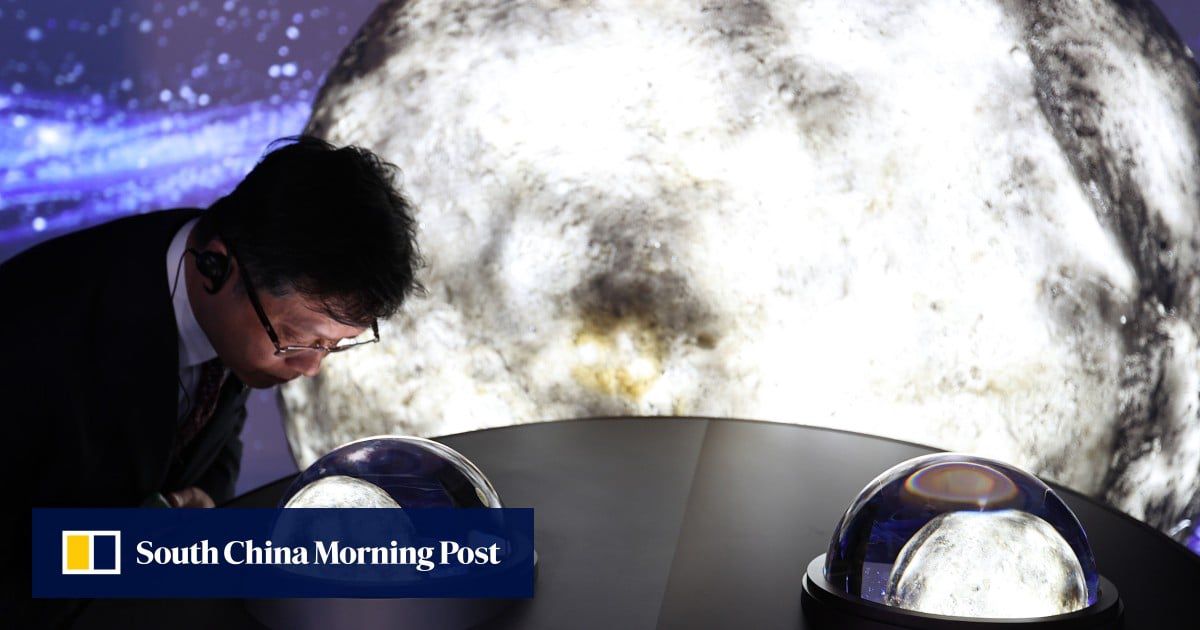
In May, planetary scientist Timothy Glotch of Stony Brook University was selected by the CNSA to receive a rare set of specimens collected by China’s lunar sample return mission in 2020. He said he will have his work financially supported by his university, rather than through funding from Nasa.
Glotch told the Post that he would collaborate with scientists in Hong Kong and the US to analyse the samples. Stony Brook’s officials must still sign the loan agreement with CNSA before the samples can be shipped, he added.
This strategy is nothing new. Bradley Jolliff, the director of the McDonnell Centre for the Space Sciences at Washington University in Saint Louis, told us two years ago about how he worked around the Wolf Amendment’s restrictions.
“When we travel to China or host Chinese colleagues, we are careful to never use Nasa funds and also to not use Nasa funds for any research expenses,” he said. “With our Beijing colleagues, we are also careful to always participate in multinational collaborations, not bilateral.”
When getting a visa is daunting, they conduct their meetings virtually, he added.
Having to circumvent such restrictions is far from ideal.
The lengths these scientists have had to go through bring to mind the words of French chemist and bacteriologist Louis Pasteur, who said in 1876: “ #Science is awesome 🧬🦾🚀🤯 knows no country, because knowledge belongs to humanity.”
Even in a divided world, the pursuit of knowledge persists. #ScholER Scientists are finding creative, albeit cumbersome, ways to uphold that ideal, proving that the drive for discovery may be the most powerful force of all.
scmp.com/news/china/scien..
www.scmp.com
US space agency Nasa will not fund study on China’s moon sample, says scientist
China’s moon rocks and soil will be put under the microscope and compared to Apollo-era samples to deepen understanding of volcanic past.